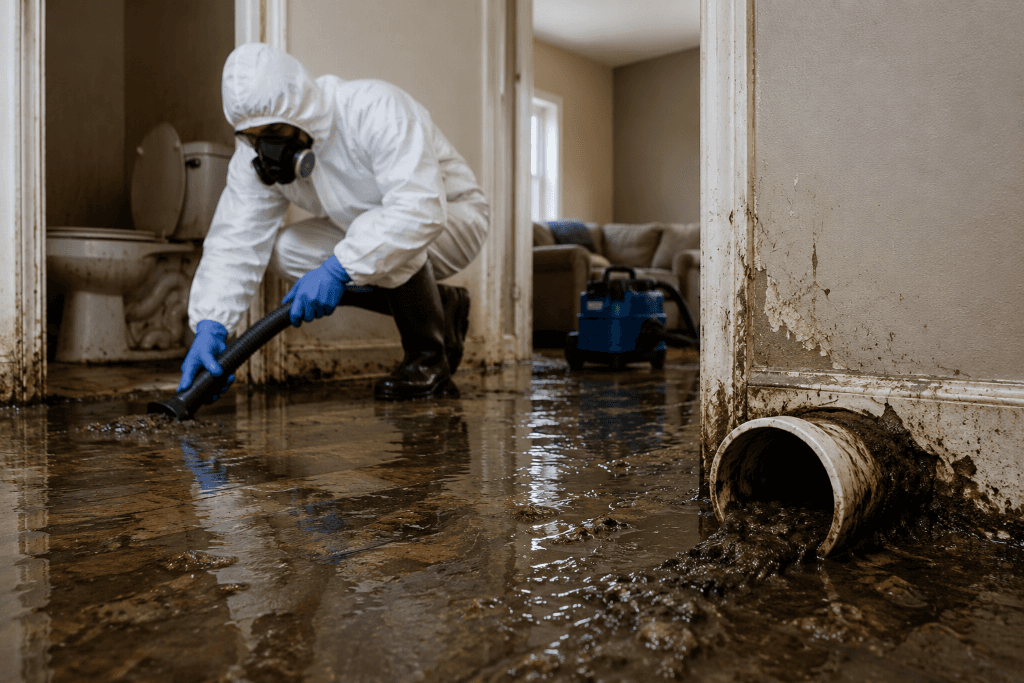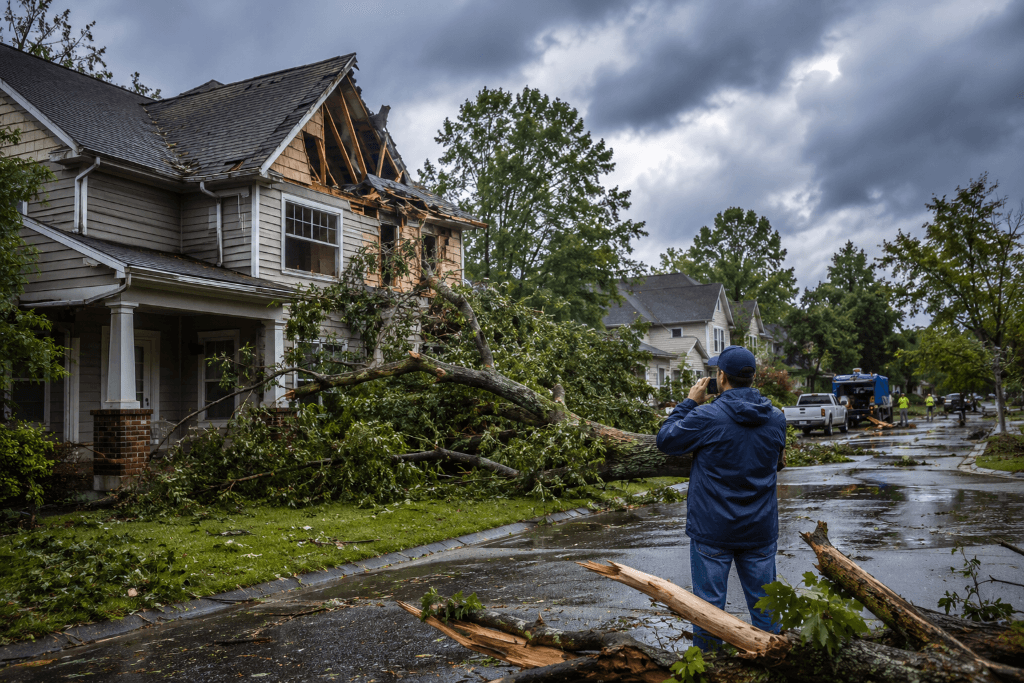
What to Do Immediately After Water Damage: A Step-by-Step Guide
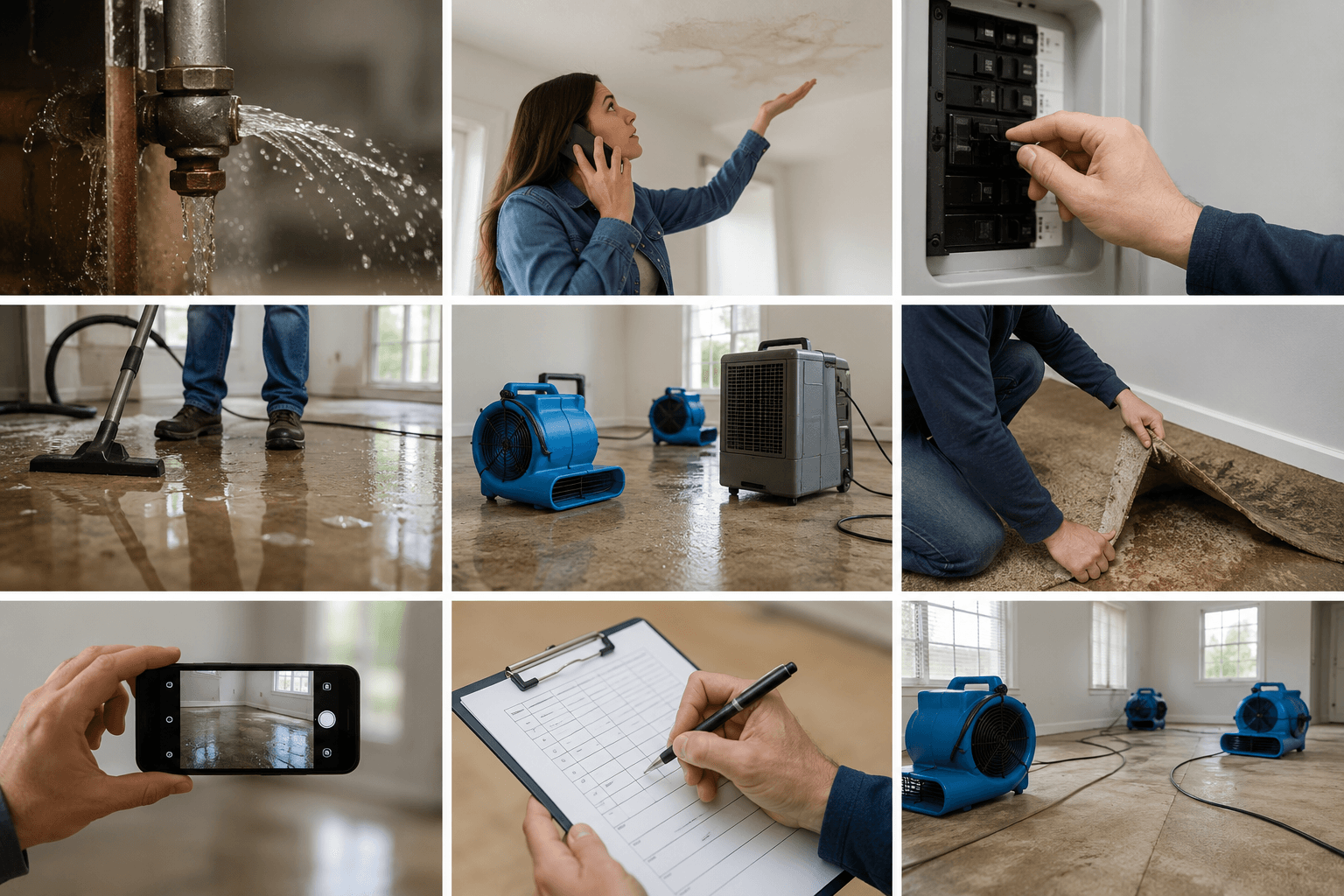
The first thirty minutes after you discover water damage shape everything that follows: how much of your home is salvageable, how much the restoration costs, and how well your insurance claim holds up. Almost none of it requires special equipment. It requires knowing the order to do things in.
This is the sequence our Charlotte crews walk homeowners through on the phone while we are on the way.
Key Takeaways
- Safety comes before everything else, and that means electricity before water.
- Photograph and video every affected area before you move or clean anything.
- The EPA warns that mold can begin growing on damp materials within 24 to 48 hours, so drying is a race.
Make the Space Safe Before You Enter
Water and electricity are the immediate hazard. Before stepping into a flooded room, shut off power to that area at the breaker panel. If reaching the panel means walking through standing water, stop and call your utility or an electrician instead.
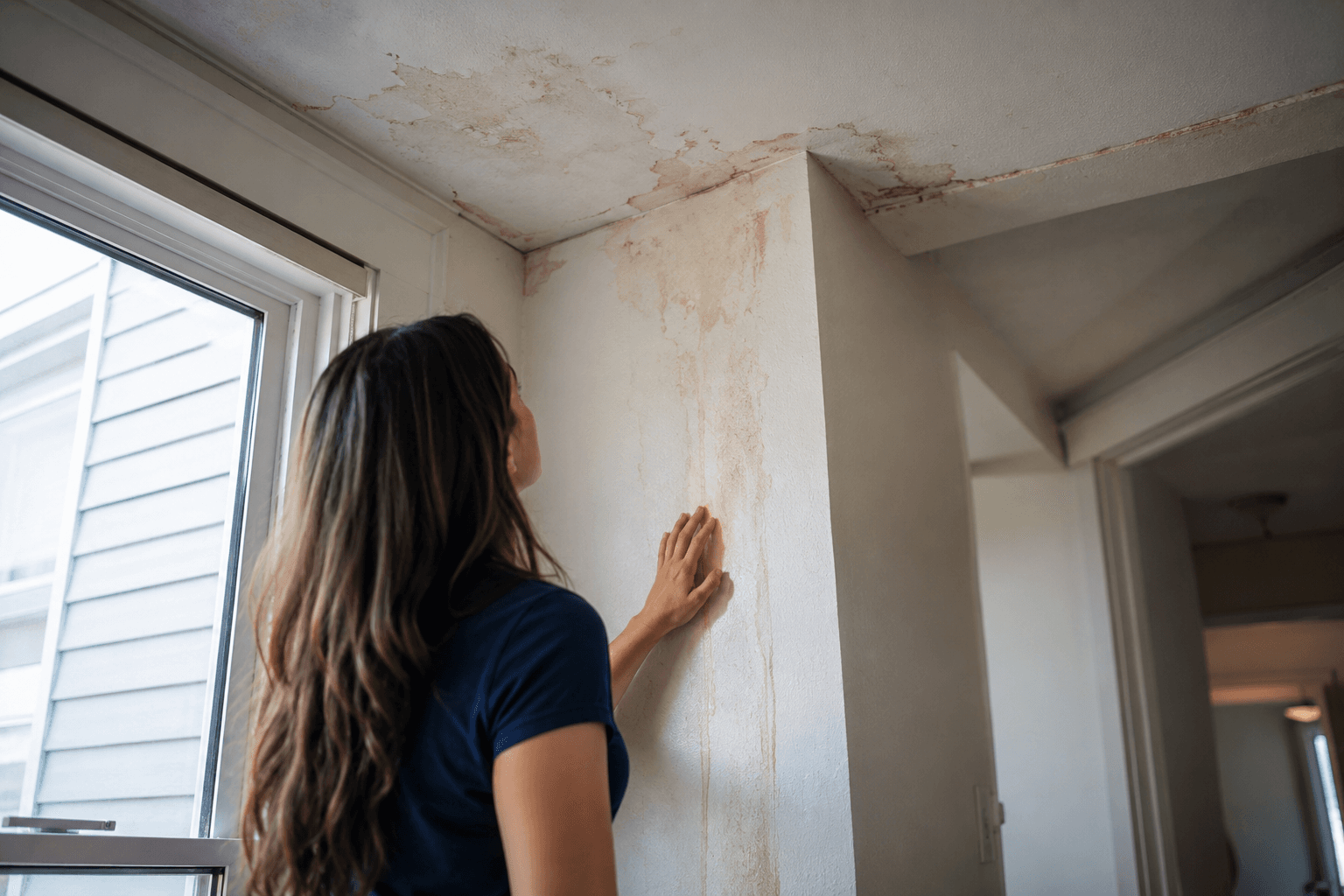
Look up as well as down. A ceiling holding water sags and can fail without much warning, so stay out from under any bulging or dripping section. If the water is or may be sewage, treat it as contaminated and keep everyone out until it is handled properly; CDC guidance on sewage and floodwater is unambiguous about the health risk.
Stop the Water at the Source
Find the source and shut it off. For a burst supply line or a failed appliance connection, that means the main shutoff valve, which is worth locating now rather than during an emergency.
Some sources you cannot stop. A roof breach during a storm or a municipal sewer backup will keep producing water regardless of what you do inside, and in those cases the priority shifts immediately to protecting what can still be saved and getting help on site.
Document Everything Before You Move Anything
This step takes ten minutes and is the one homeowners most often skip in the rush to start cleaning.
Photograph and video every affected room from several angles before anything is touched. Capture the standing water, the source, the ceilings and walls, the flooring, and each damaged item. Record model and serial numbers on appliances and electronics, and note the date and time you discovered the damage.
Once extraction starts, the original condition cannot be recreated. An adjuster who sees the room three days later is looking at a partially dried space, and your photographs are the only record of what it actually looked like.
Move What You Can Save
Get valuables, electronics, documents, photographs, and irreplaceable items out of the wet area and somewhere dry. Lift furniture off wet carpet where you can manage it safely, and place aluminum foil or plastic under the legs of anything too heavy to move, which prevents finish and rust stains bleeding into the carpet.
Do not attempt to move anything heavy on a floor that feels soft or spongy underfoot. A saturated subfloor is a structural question, not a furniture question.
Call a Restoration Professional
Call as early in this sequence as you can, because the clock that matters is the drying clock. Water wicks into subfloor, wall cavities, and insulation within hours, and Charlotte's humidity works against you the entire time.
A professional crew brings extraction capacity, commercial dehumidification, and moisture meters that tell you what is actually wet rather than what feels wet. Under the IICRC S500 standard, drying is measured against a documented dry standard rather than judged by hand. Our emergency response line is staffed around the clock, and our structural drying crews handle the part homeowners cannot: the moisture you cannot see.
Open Your Insurance Claim
Notify your carrier once the immediate hazards are handled. Open the claim, write down the claim number, and get your adjuster's name and contact details.
Keep every receipt from this point forward, including tarps, equipment rental, temporary lodging, and meals if your kitchen is out of service. Many policies include additional living expenses coverage that goes unclaimed simply because nobody tracked the spending. Our insurance claims guide covers the documentation that tends to matter most.
What Not to Do
A few common instincts make things worse:
- Do not use a household vacuum to remove water. It is not built for it and it is an electrocution risk.
- Do not run ceiling fans in a room where the ceiling is holding water.
- Do not use electrical appliances while standing on a wet floor.
- Do not throw away damaged items before they have been documented and, ideally, seen by your adjuster.
- Do not assume that surface-dry means dry. Materials hold moisture well after they feel fine to the touch.
- Do not wait to see whether it dries on its own. In Charlotte's humidity, it generally will not.
Frequently Asked Questions
How long do I have before mold starts growing?
EPA guidance indicates mold can begin growing on damp materials within 24 to 48 hours. Warm, humid conditions shorten that window, which is why summer losses in Charlotte need faster response.
Can I dry it out myself with fans?
Household fans move air but do not remove meaningful moisture from the structure, and without a moisture meter there is no way to confirm materials have actually dried. Small, clean-water spills caught immediately are sometimes manageable; anything that soaked into flooring or wall cavities is not.
Should I call my insurance company or a restoration company first?
Handle safety first, then call restoration, then your carrier. Mitigation is a duty under most policies, so starting it promptly supports the claim rather than complicating it.
Does homeowners insurance cover water damage?
Sudden and accidental damage is typically covered, while damage from a long-running leak is often excluded as a maintenance issue. Flood is excluded from standard policies and requires separate coverage.
Water Damage in Charlotte? Call Now
The order matters more than the effort. Make it safe, stop the water, document it, then get professional drying started before the moisture spreads.
Our water damage restoration team responds across Charlotte around the clock with extraction, structural drying, and the documentation your insurance claim will need.