

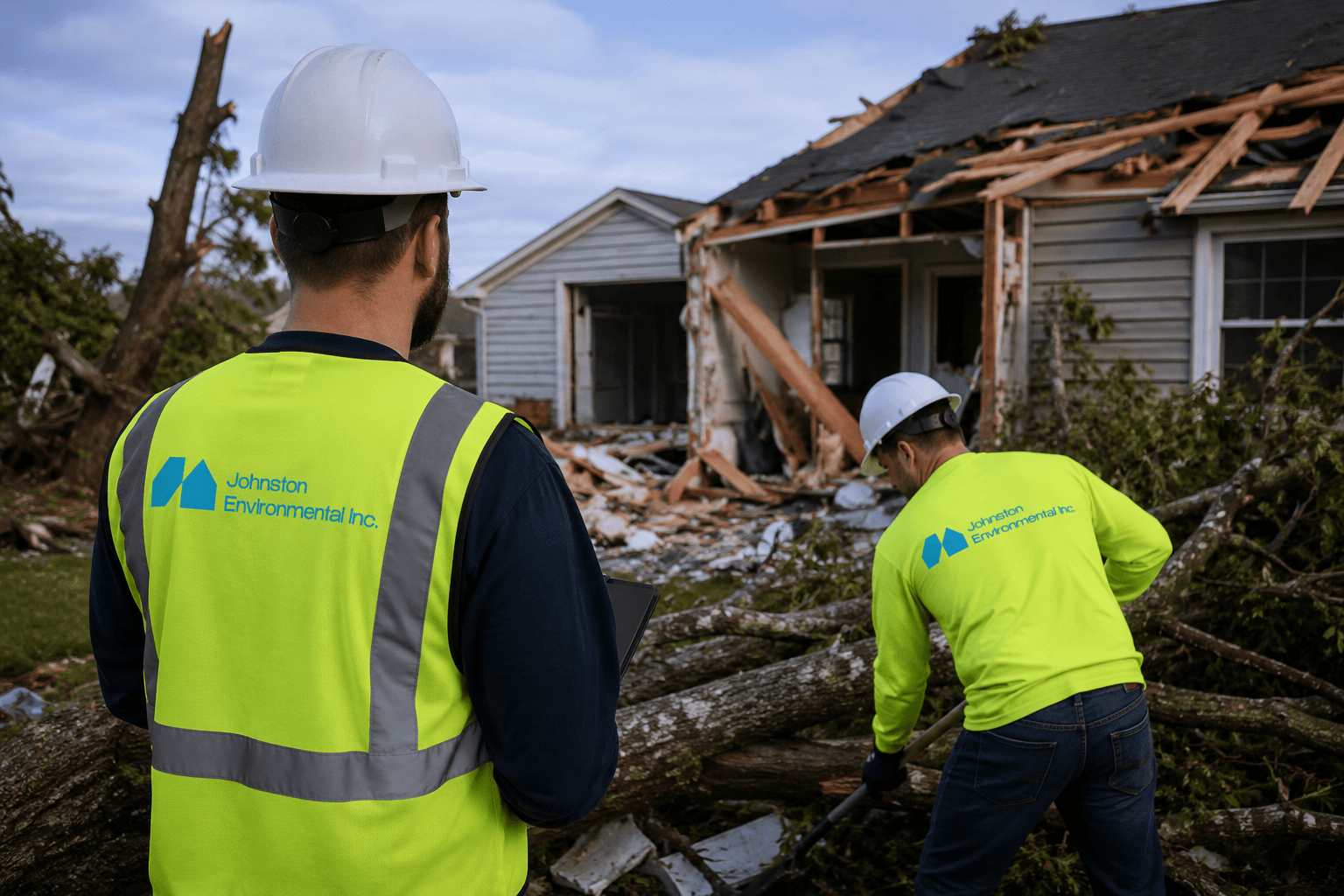
Our Storm Damage Restoration Process in Charlotte
Storm recovery runs in phases, and the order matters. Stop the intrusion first, dry it out, then rebuild once, properly. Here is how a Johnston storm job unfolds.
Tarp and Board-Up First
The clock matters most before the next rain band arrives. Crews tarp open roof sections, board broken windows, and set temporary waterproofing on the first visit. Protection comes before paperwork.
Walk the Damage With You
Once the property is secured, we document everything: roof, attic, siding, gutters, interior ceilings. Photos and moisture readings go into a claim-ready file. You see the full picture before any tear-out starts.
Extract the Water That Got In
Storm water rarely stays outside. Pumps and extractors clear standing water while the source stays sealed. Wet insulation and soaked carpet pad come out early, before they turn into a mold problem.
Dry the Structure to the Studs
Air movers and dehumidifiers run until framing and subfloors read dry on a meter. In humid Charlotte summers, guessing is how attics stay wet for weeks. We log readings until the numbers say done.
Clear the Trees and Debris
Fallen limbs, scattered shingles, and yard debris get hauled off as the drying runs. If a tree came through the structure, we coordinate safe removal before repairs begin.
Rebuild What the Storm Took
Roofing, siding, drywall, flooring, and paint, handled by one contractor under one claim. No juggling three trades while you live in a construction zone. The house goes back together in one continuous job.
Close Out the Claim File
You get the final documentation package: photos, readings, scope, and invoices that match. Adjusters close clean files faster, and you keep the record for resale.
Storm Services We Run Across Greater Charlotte
Wind, water, and trees each break a house differently. Most storm calls need two or three of these at once. All of them run under the same roof here.
Emergency Roof Tarping and Board-Up
Open roofs and broken windows cannot wait for an adjuster's schedule. We tarp, board, and waterproof on arrival, day or night. The goal is simple: nothing else gets in.
Storm Water Extraction and Drying
Rain that follows roof damage soaks insulation, ceilings, and floors fast. Our water damage restoration crews extract, then dry the structure to measured targets. If a creek or downpour flooded at grade, flood cleanup handles the rising-water side.
Tree and Debris Removal
From a limb through the porch roof to a yard of scattered shingles, we clear it. Structural tree strikes get coordinated removal, so nothing shifts while it is being cut.
Full Storm Reconstruction
Roofing, siding, drywall, flooring, and finish paint under one contract. Rebuilding with the same company that dried the structure means nothing gets closed up wet. One point of contact carries the claim to the end.
The Storms That Hit Charlotte Hardest
Charlotte sits far enough inland to dodge most direct hurricane hits, but not their remnants. Add summer supercells and fast-rising creeks, and the metro sees real storm losses every year. The National Weather Service record here is specific.
Straight-Line Thunderstorm Winds
Most local wind damage comes from summer thunderstorms, not tornadoes. NWS surveys traced straight-line wind damage across western Mecklenburg County after the March 2010 Palm Sunday storms. Gusts like those lift shingles, snap limbs, and drive rain sideways into siding.
Tornadoes: Rare, Not Theoretical
The March 2012 EF-2 near Harrisburg left 29 Mecklenburg County homes with major damage and destroyed four. That corridor sits inside our service area. Rare is not the same as never.
Tropical Remnants
Decaying tropical systems still carry enough wind to drop trees far inland. When Hermine crossed the Carolinas in 2016, NWS reports logged trees down across Mecklenburg and Union counties. Saturated ground plus one more gust is how oaks end up on roofs.
Hail on Roofs and Siding
NWS climatology for this region notes large hail is far less rare than tornadoes. Bruised shingles and cracked siding often look fine from the driveway. The leak shows up two storms later.
Flash Flooding on the Creeks
Little Sugar, Briar, and McAlpine creeks rise fast in a hard downpour. Homes along those corridors can take rising water while the roof stays intact. Different damage, different claim, same phone call.
Damage the Storm Leaves Hidden
The dramatic damage announces itself. The expensive damage usually hides for weeks. After any hard blow through Charlotte, check for these quieter signals.
Shingles That Lifted and Sat Back Down
Wind can crease a shingle without tearing it off. From the ground the roof looks untouched, but the seal is broken. The leak arrives with the next sideways rain.
Ceiling Stains That Appear Days Later
Storm water travels along rafters and framing before it shows. A faint ring on the ceiling a week after the storm is not a coincidence. Map it back before painting over it.
A Musty Attic After the Rain
Wet insulation holds water quietly and breeds odor first. If the attic smells different after a storm, insulation likely took water. Left alone in summer heat, that becomes a job for our mold remediation crews.
Granules Piling in the Gutters
Shingle granules collecting in gutters after hail mean the roof shed its armor. Bruises underneath show up on an inspection, not from the street. Document it before the next storm finishes the job.
Windows That Fog After the Front Passes
Pressure and debris can break a window seal without cracking the glass. New condensation between panes after a storm is seal failure. It is small, until the sill under it rots.
Who You Call Matters After a Charlotte Storm
Big storms bring out-of-town operators to Charlotte driveways within days. Choosing carefully is worth more than choosing fast. Here is what you get with us.
On the Roof Before the Next Rain Band
Crews respond around the clock and reach most of the metro inside an hour. Tarping and board-up happen on that first visit, not after an estimate cycle. Speed here is what keeps a repair from becoming a rebuild.
A Charlotte Company, Not a Storm Chaser
We are locally owned and have worked these neighborhoods for more than twenty years. When the yard signs and door-knockers leave town, we are still here. Your warranty is worth something because we are around to honor it.
Wind Claim or Flood Claim? Documented Both Ways
Wind damage runs through your homeowners policy; rising water runs through flood coverage. We photograph and log the cause trail so your claim lands in the right lane. Sorting that out early prevents ugly surprises later.
Certified for the Water That Follows the Wind
Our IICRC-certified technicians handle the extraction, drying, and moisture verification behind every storm repair. The rebuild only starts once readings hit dry standard. That is how you avoid rebuilding twice.
One Manager From Tarp to Final Coat
The person who answers your 2 a.m. call is tied to the same file as your painter. One manager, one claim, one schedule. Nothing falls between trades.
A Guarantee That Survives the Season
Storm repairs get tested by the next storm. If our work falls short, we come back and make it right. That is in writing on every job.
Storm Response Coverage: Charlotte and 40 Miles Out
Storm tracks do not respect city limits, so our coverage runs roughly 40 miles in every direction. The heavy tree canopy over Myers Park, Dilworth, Cotswold, and Plaza Midwood makes tree strikes the top local risk. Creekside blocks near Little Sugar, Briar, and McAlpine creeks see the flash-flood side, from NoDa through SouthPark, Ballantyne, and Steele Creek.
Outside the city, storm calls run to Matthews, Mint Hill, Indian Trail, Stallings, Waxhaw, Weddington, and Pineville. Huntersville, Cornelius, Davidson, Mooresville, Concord, Kannapolis, and Harrisburg cover the north. Gastonia, Belmont, and Mount Holly hold the west. South of the line, Fort Mill, Rock Hill, Tega Cay, and Indian Land stay on the route list. Not named? Call anyway, the map keeps stretching.
Straight Answers on Charlotte Storm Damage
After a storm, you need decisions more than sales pitches. These are the questions we answer most often standing in Charlotte driveways. Bring us the rest when you call.
Do you provide emergency tarping after storms?
Yes, around the clock, and it is usually the first thing we do on site. Tarping and board-up protect the house before full repairs are scoped. Most insurance policies expect you to prevent further damage, and tarping is exactly that.
How soon should I call after storm damage?
Before the next rain if at all possible. Openings let water compound the original damage by the hour. Even if repairs wait, getting the property sealed and documented early protects the house and the claim.
Does homeowners insurance cover storm damage in North Carolina?
Wind, hail, and falling-tree damage are typically covered under standard homeowners policies. Rising water from creeks or runoff needs separate flood coverage. We document the cause carefully so each part of the loss goes to the right policy.
Is a tree on my house covered?
When a tree strikes a covered structure, removal and repairs are typically part of the claim. A tree that falls in the yard without hitting anything often is not. Either way, do not cut anything leaning on the structure yourself.
Should I sign with the first contractor who knocks?
Slow down. After big storms, out-of-town crews canvass Charlotte neighborhoods asking homeowners to sign over claim rights. Think hard before signing an assignment of benefits on the doorstep; check licensing, insurance, and local references first.
What should I document before cleanup starts?
Photograph everything before anything moves: roof, rooms, yard, the tree on the fence. Keep damaged material samples where practical, and save receipts for tarps or hotel nights. Your adjuster can use all of it, and so can we.
How long does storm restoration take?
Tarping happens day one; drying typically runs several days. Rebuild timelines depend on scope and materials, from days for drywall and paint to weeks for roofing and siding. You get a written schedule before reconstruction starts.
Do you handle the rebuild too, or just the cleanup?
Both, under one contract. Roofing, siding, drywall, flooring, and paint follow the drying phase with the same manager in charge. One contractor from tarp to final coat is the whole point.
Get a Charlotte Storm Crew Moving Now
More rain is always coming, and open damage does not wait for it politely. Call Johnston Environmental at (704) 860-4062, day or night, and a crew starts toward you. From emergency tarping to storm damage restoration in Charlotte, NC, one call covers the whole recovery.
Call (704) 860-4062 Now