

Why Charlotte Backups Start With a Blockage, Not a Storm
Charlotte Water has run this system since 1899 and now maintains 4,695 miles of wastewater main. It serves about 1.2 million people and treats roughly 84 million gallons a day. Five creek-named plants carry that load: Sugar Creek, Irwin Creek, McAlpine Creek, Mallard Creek, and McDowell Creek.
Its own FY26 figures explain why local backups happen. There were 171 sanitary sewer overflows across the system. Debris in the line caused 43 and tree roots caused 41, with pipe failure behind another 38. Inflow and infiltration, the storm-water route, caused none at all.
The maintenance numbers point the same way. Crews cleaned 731 miles of pipe that year and treated 321 miles with root-control chemicals. Inspectors also checked 4,033 grease traps at food businesses across the county.
So a Charlotte backup is usually a blockage story. Wipes, grease, and roots narrow a line until flow reverses into the lowest opening available.
Where that opening sits depends on the foundation. Dilworth, Plaza Midwood, and Myers Park were built from the 1890s onward over vented crawl spaces, so sewage spreads beneath the floor. Ballantyne and Steele Creek sit on slabs, where it stays at floor level.
Charlotte Sewage Cleanup by the Numbers
Cause comes first, because it predicts recurrence. Charlotte Water logged 171 sanitary sewer overflows in FY26, with debris at 43, roots at 41, and pipe failure at 38.¹ Storm-driven inflow accounted for none of them. The utility answers quickly when the main is theirs, averaging a 31-minute spill response.² Across the network that works out to 3.6 spills per 100 miles of pipe.³ Root pressure is constant here, and Charlotte Water treats 321 miles of pipe with root-control chemicals every year.⁴ None of that changes what is on your floor, which the IICRC classifies as Category 3 water. Category 3 is grossly contaminated, and that is what condemns porous material instead of allowing a clean.
- Charlotte Water, FY26 Sanitary Sewer Overflows, effective July 1 2026, https://www.charlottenc.gov/water/About-Us
- Charlotte Water, FY26 average spill response time, https://www.charlottenc.gov/water/About-Us
- Charlotte Water, FY26 spills per 100 miles of pipe, https://www.charlottenc.gov/water/About-Us
- Charlotte Water, FY26 Maintenance and Rehabilitation, https://www.charlottenc.gov/water/About-Us
Sewage Under a Charlotte Crawl Space and Nobody Wants to Go In?
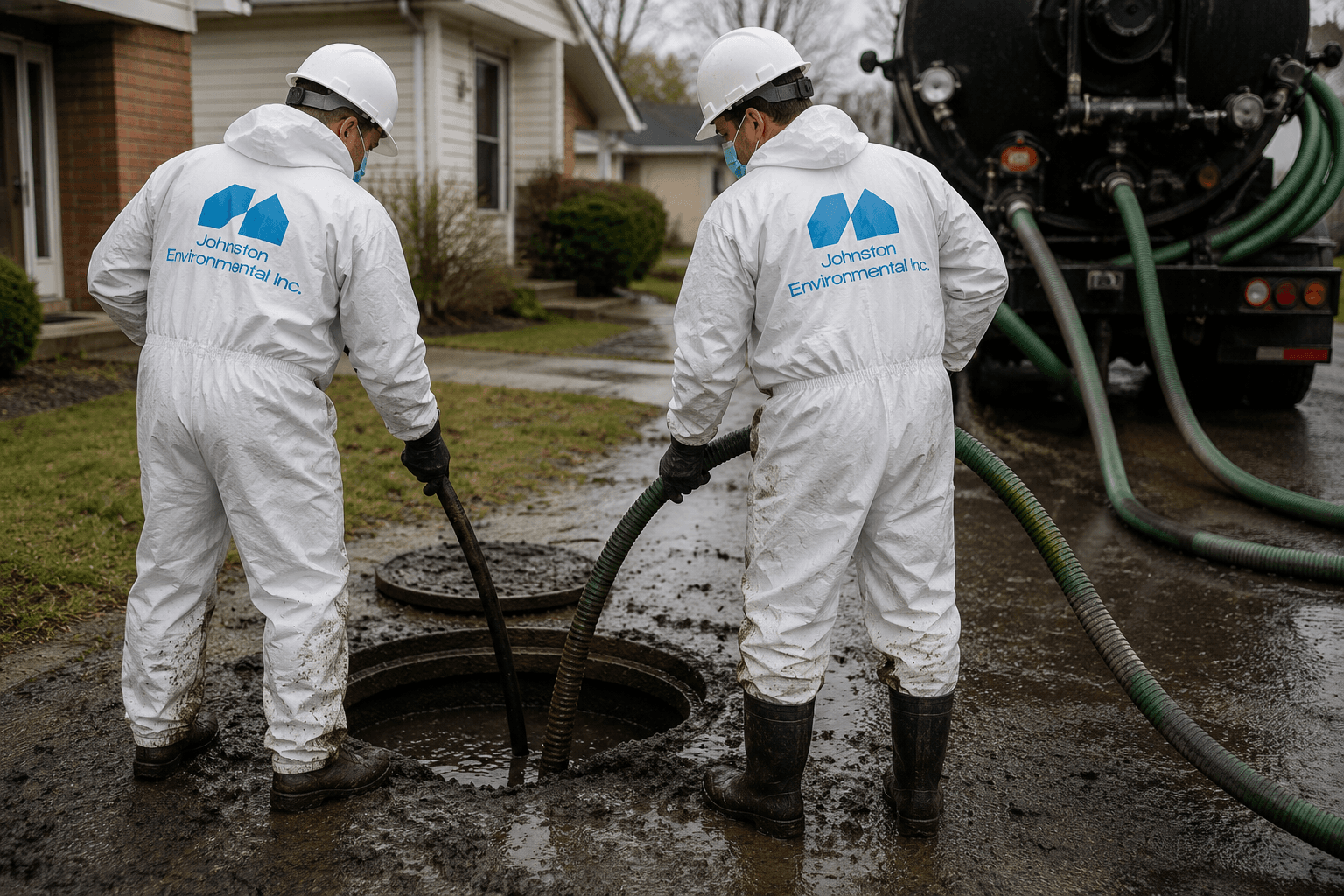
That is the part most callers cannot inspect themselves. Johnston Environmental works Charlotte crawl spaces daily and can tell you what is salvageable from under the floor.
Call (704) 860-4062 NowHow a Charlotte Sewage Job Runs Under the Floor
Charlotte splits by foundation, not by zip code. A Dilworth crawl space and a Ballantyne slab are two different jobs. These four steps cover both.
Get Under the House Before Anything Indoors
In Dilworth, Plaza Midwood, and Myers Park, the crawl space is where the waste actually sits. A technician goes in first to map how far it traveled along the joist bays. Nothing upstairs gets scoped until that is known.
Strip the Vapor Barrier, Insulation, and Anything Porous Below
Sewage-soaked batt insulation and plastic sheeting do not get cleaned in place. They come out of the crawl space in bags, along with contaminated debris off the soil. Ductwork that carried waste indoors gets pulled rather than wiped.
Treat the Soil and Framing That Have to Stay
The ground under a Charlotte crawl space cannot be removed, so it gets treated and documented instead. Joists, girders, and subfloor sheathing are cleaned, dried, and checked against moisture readings before we close up.
Cut Back Roots Before the Line Goes Into Service
Roots caused 41 of Charlotte Water's overflows last year, and mature trees line the older streets. We flag whether the lateral needs cutting or lining, because a cleaned crawl space refills otherwise.
Signs a Charlotte Home Has a Sewage Problem
In a crawl-space city the evidence usually arrives from below. These are the ones Charlotte callers describe before anyone opens a hatch.
A Sewer Smell Rising Through the Floor of a Dilworth Bungalow
Pre-war homes with vented crawl spaces pull air upward through gaps around pipes and registers. A smell that is strongest near interior walls usually means something under the floor rather than in it.
Standing Waste Pooled on the Crawl-Space Vapor Barrier
Plastic sheeting holds liquid where bare soil would absorb it, which makes the problem slow to dry. If the barrier is pooled or stained, the backup already reached the joist bays.
Crawl-Space Insulation Sagging Away From the Subfloor
Saturated batt insulation gets heavy and drops out of its supports. Fallen or hanging insulation under a Myers Park or Plaza Midwood floor is often the first thing a homeowner actually sees.
Floor Registers Smelling Worse Once the Fan Runs
Much of Charlotte's older housing stock runs ductwork through the crawl space itself. If the odor sharpens when the system kicks on, the duct exterior has likely been in contact.
What Johnston Environmental Brings to a Charlotte Sewage Call
Crawl-space sewage is the version of this job most crews would rather subcontract. We do it in Charlotte ourselves.
Confined-Space Crawl Work Under Dilworth and Myers Park Homes
Someone has to go into a tight crawl space with contaminated soil underneath. Our technicians do that part themselves rather than scoping it from the hatch.
We Cross-Check the Cause Against Charlotte Water's Own Record
Charlotte Water publishes overflow causes and averaged a 31-minute response on its own mains. Comparing that record against what we find tells you quickly whether the main or your lateral failed.
Soil and Sub-Floor Treatment No Charlotte Slab House Needs
Slab losses end at the flooring, and a crawl space keeps contaminated ground in place permanently. We treat and document the soil, joists, and sheathing so the space is not left to dry on its own.
We Tell You When the Charlotte House Is Safe to Reoccupy
Families want a date, not a description of the process. We set the re-entry point on readings and visual clearance of the crawl space, then put it in writing.
Charlotte Areas We Cover for Sewage Cleanup
Getting to the waste is half of a Charlotte crawl-space job. Access, clearance, and parking decide how quickly a crew is actually working.
Inner Neighborhoods We Reach First
Dilworth, Myers Park, and Plaza Midwood sit closest to where we stage, so a crew is usually on site inside the hour. The trade-off is access: narrow driveways and rear lanes mean equipment gets carried rather than wheeled. Crawl hatches in these homes are often original and undersized, so we bring low-clearance gear as standard.
Older Streets Where Clearance Is the Constraint
NoDa and Madison Park mix masonry piers with later additions, which cuts the working height under the floor. In places that leaves a body-length crawl rather than a stooping one. We scope the entry before quoting, because clearance changes both the timeline and the crew size.
Outer Corridors We Cover on the Same Terms
Ballantyne, Steele Creek, University City, and Cotswold are a longer run but easier ground. Driveways take a truck, slabs need no crawl entry, and townhome blocks usually allow direct access to the affected unit. Coverage and response targets do not change with the zip code.
Charlotte Sewage Cleanup Questions
These are the questions Charlotte callers ask before anyone opens a hatch. Straight answers below.
How do you get rid of raw sewage under a house?
Everything porous under there comes out first, which usually means insulation, vapor barrier, and contaminated debris off the soil. The ground itself stays, so it gets treated and documented rather than removed. Then the joists and subfloor are cleaned, dried, and verified with moisture readings before the space is closed.
Will a plumber clean up the sewage as well?
Usually not, and the two jobs are priced separately. A plumber clears the blockage and restores flow, which is what stops the backup. Removing contaminated material and decontaminating the crawl space is remediation work, and that is the part we do.
Can the ductwork in my crawl space be saved?
It depends whether waste reached the inside of the run. Flex duct with contaminated insulation on the outside is normally replaced rather than cleaned. Sealed metal duct can sometimes be decontaminated, and we tell you which case you have before quoting it.
What makes a Charlotte crawl-space cleanup cost more than a slab one?
Access and soil. A slab loss ends at the flooring. A crawl space adds confined-space work plus insulation and barrier removal. It also means treating ground that cannot be taken away, and the spread along the joist bays drives the number.
Are you actually based in Charlotte?
Yes, we stage in the city rather than driving in from a neighboring county. Most Charlotte addresses sit inside our 60-minute target, and we answer the phone around the clock. Assessment usually happens on that first visit.
Sewage Does Not Stay Put in a Charlotte Crawl Space
It wicks into joists, insulation, and ductwork while it sits. Call (704) 860-4062 now and we will get someone under the house today. Johnston Environmental is based here, sends IICRC-certified crews, and treats the soil rather than covering it. Most Charlotte addresses sit inside our 60-minute target, from Dilworth to Steele Creek.
Call (704) 860-4062 Now