

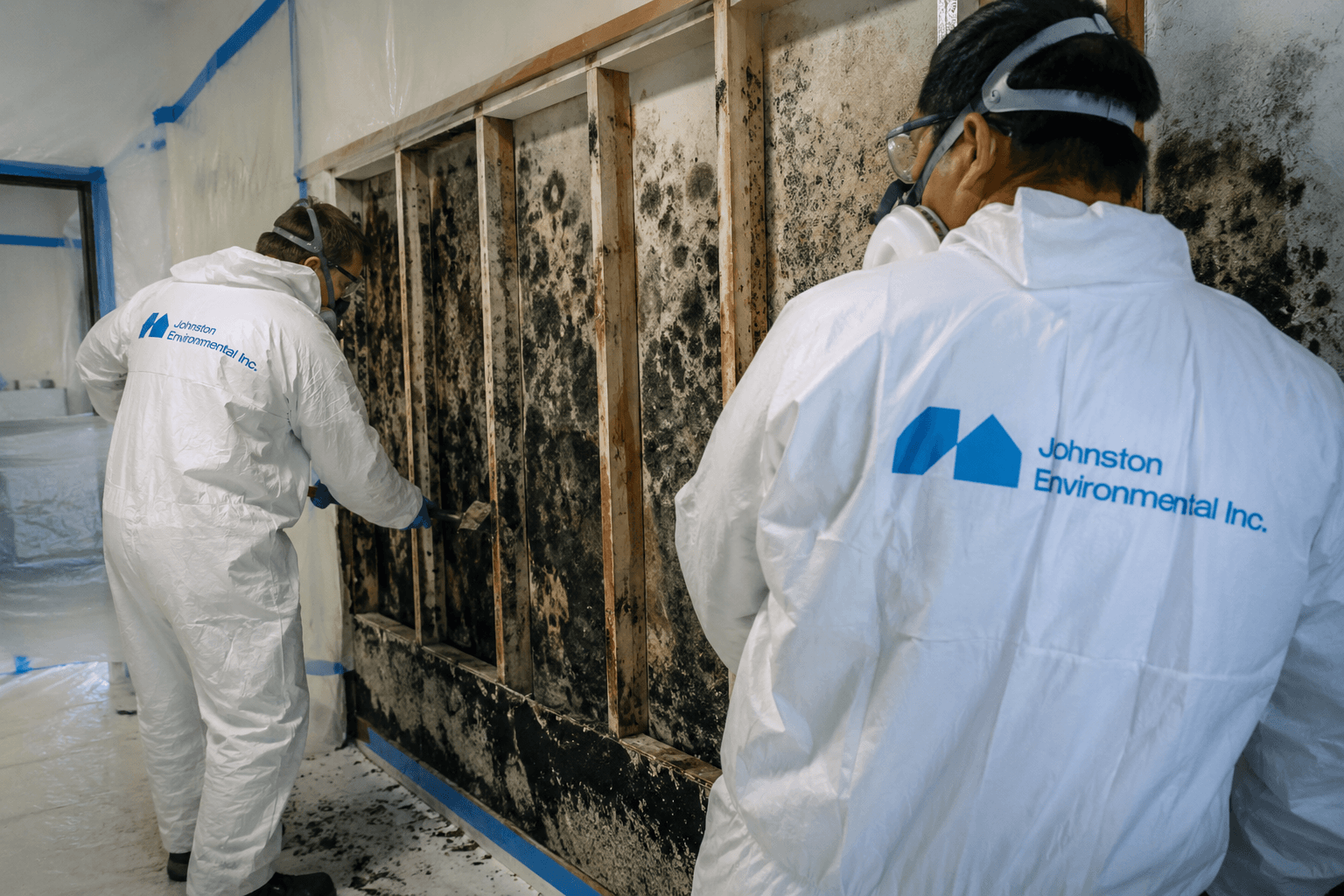
Concord Quadrupled in Thirty Years, and Its Mold Problems Arrived With the Build-Out
Concord counted about 27,000 residents in 1990. The 2025 estimate is 114,598, and the city passed 105,000 at the 2020 census. Housing followed that curve closely. Roughly 22,500 housing units stood here in 2000, and the count reached 32,130 by 2010.
Most annexation since the 1970s pushed west of downtown toward Charlotte and the Mecklenburg line. That is where the master-planned subdivisions went up. Christenbury, Moss Creek, Afton Village, and Skybrook are products of that boom. They are slab-on-grade or shallow-crawl homes with sealed envelopes, attic duct runs, and builder-grade bath fans. None of that stock is old enough to look suspicious to its owner.
The old core is a different building altogether. Along North Union Street, South Union Street, and Edgewood Avenue, significant homes date to the late 1800s and early 1900s. Mill Hill carries cottages from the Odell-Locke-Randolph cotton mill era. Those houses hold plaster, lath, and heart pine that stay wet long after drywall dries.
Concord sits at 633 feet in the Piedmont, on rolling hills, under a humid subtropical climate. NOAA normals put annual rainfall at 47.87 inches, and July is the wettest month at 5.31 inches. Census figures show 65.2 percent of Concord homes are owner-occupied, at a median value of $353,700. A mold bill here usually lands on the owner.
Bought a Newer Concord Home and Still Smelling Something Musty?
That smell is usually mechanical, not cosmetic, and it does not clear on its own. Johnston Environmental works Cabarrus County daily and can trace where the moisture actually starts.
Call (704) 860-4062 NowHow Concord Homes Show Mold
The signal depends on which Concord you live in. New subdivisions telegraph mechanical problems, and the downtown historic blocks telegraph material ones. These four come up most often on Cabarrus County calls.
Black Speckling Around Ceiling Vents in Christenbury and Moss Creek
Cold supply air hits a humid ceiling cavity and condenses right at the register. Gray or black dotting on the diffuser edge is often the first visible growth in these newer homes.
A Musty Return-Air Smell That Sharpens When the AC Starts
Attic ductwork in west Concord subdivisions runs through unconditioned space all summer. If the odor arrives with the airflow, the growth is likely inside the system rather than the room.
Base-Trim Staining on a Slab-on-Grade Floor Plan
Post-2000 Concord homes have no crawl space, so slab moisture shows up at the bottom of the wall. Swelling baseboards or dark seams along the lowest inch of drywall point to water tracking sideways.
Cupping Heart-Pine Floors in the Union Street Historic Districts
Original pine in the 1890s and 1900s homes cups when humidity soaks it from below. A wavy floor near an exterior wall usually means the material has been damp for months.
How a Concord Mold Job Actually Runs
Concord splits into two very different jobs. A Christenbury two-story and an 1890s Union Street home fail for opposite reasons. Four steps cover both, and the house decides the order.
Put the Air Handler and Duct Run First in the Newer Subdivisions
In Moss Creek, Christenbury, and Skybrook, the attic air handler gets opened before any wall does. Oversized systems in these homes short-cycle, cool the air quickly, and never run long enough to strip humidity. We check plenum sweat, filter loading, and whether the bath fans actually terminate outside the roof.
Read the Slab Before Assuming a Leak
Most post-2000 Concord subdivisions sit on slab-on-grade with no crawl space to enter. There is nothing underneath to inspect, so moisture gets mapped through flooring, base plates, and the lowest foot of drywall. Meter readings across the slab tell us whether the water came up or came down.
Treat Union Street Plaster in Place, Cut West-Side Drywall
The decision rule changes with the address. Lath and heart pine near North Union Street and Mill Hill stay in place wherever the material is sound. Replacements never match the original milling. Builder-grade drywall in a Skybrook or Afton Village home gets the opposite call: cut it, bag it, replace it.
Correct the Mechanical Cause Before Closing the Job
Removal without a humidity fix only resets the clock in a Concord subdivision. We flag short-cycling equipment, undersized returns, and bath fans that dump into the attic. The homeowner leaves with a specific correction list, because otherwise the growth returns every August.
What the Numbers Say About Mold Risk in Concord
Start with how fast this city got built. Concord went from 79,066 residents in 2010 to an estimated 114,598 in 2025.¹ That means most local housing is young, and young houses tend to fail mechanically rather than structurally. Rainfall is the second factor. NOAA normals for Concord log 47.87 inches a year, peaking at 5.31 inches in July.² Wet months meet sealed envelopes, and the moisture has nowhere to go. Timing decides the rest. The EPA warns that damp materials need to dry within 24 to 48 hours, or mold typically begins growing.³ Credentials matter more here than owners expect, because North Carolina runs no state mold certification program at all.⁴
- US Census QuickFacts, Concord city NC, 2025 population estimate
- NOAA NowData 1991-2020 climate normals, Concord, NC
- EPA, A Brief Guide to Mold, Moisture and Your Home
- NC State Extension Healthy Homes, Mold Remediation Professionals, May 2024
What Johnston Environmental Brings to a Concord Job
Owners of newer Concord homes usually arrive with the same handful of doubts. Here is how we answer them on site.
We Start at the Equipment, Not the Drywall, Across Cabarrus County
Most growth west of downtown begins at a sweating plenum or an attic duct seam. Opening the system first means the repair targets the cause rather than the stain.
We Dry Slab Homes That Give Us No Crawl Space in Concord
Post-2000 floor plans leave nothing underneath to work from, so drying runs through flooring and base plates. Our structural drying gear is configured for that geometry, not a vented foundation.
We Work Both Concords, From Christenbury Builds to Union Street Lath
One crew has to handle a 2005 subdivision and an 1890s downtown home in the same week. We keep separate playbooks for each, and both run to the IICRC S520 standard. The wrong approach destroys original material or misses the cause entirely.
We Will Say When a Concord Home Does Not Need Remediation
Not every musty smell in a newer subdivision turns out to be mold. When the readings point to humidity control instead of remediation, that is what the report recommends.
Concord Areas We Cover for Mold Remediation
Concord divides cleanly for mold work. The west-side subdivisions fail at the equipment, and the Union Street core fails at the material. We work both halves of the city.
West Concord Subdivisions, Where the Equipment Fails First
Christenbury leads this list, because its 2000s attic air handlers sweat through July and seed growth at the plenum. Moss Creek repeats the pattern in north Concord, where greenway-adjacent lots keep slabs damp and base plates hold water. Skybrook, out along the Cabarrus and Mecklenburg line, is built tight enough that shower moisture never leaves the envelope. Afton Village adds a different wrinkle, since compact lots and shaded siding hold rainfall against the wall for days.
The Union Street Core, Where the Material Fails First
Historic Downtown Concord is the opposite job, with late-1800s and early-1900s plaster and lath that stay damp for weeks. North Union Street, a National Register district of Victorian-era homes, hides its trouble in original heart pine that cups from below. Mill Hill carries cotton-mill-era cottages from the Odell-Locke-Randolph mill, where older masonry wicks ground moisture into wall bases. Edgewood Avenue rounds out the core, and its later additions meet original framing at band joists nobody inspects.
Beyond the City Limits in Cabarrus County
Cabarrus addresses outside Concord proper get the same crews and the same drive. Kannapolis, Harrisburg, Mount Pleasant, and Midland all sit inside our normal run up I-85 and US 29. Housing there mixes mill-era cottages with the same 2000s subdivision stock, so both playbooks travel.
Concord Mold Remediation Questions
Cabarrus County homeowners tend to ask the same handful of questions. Here are straight answers before you book anything.
How do I check a mold contractor's credentials in North Carolina?
Start by knowing that the state issues no mold license at all. NC State Extension confirms no federal or state certification program exists for remediation companies here. Ask for the IICRC certification and the S520 scope in writing. We provide both before work starts.
Why does mold keep coming back in my Concord home?
Because the removal fixed the growth and not the humidity that fed it. In post-2000 subdivisions the usual culprit is cooling equipment that short-cycles and never dries the air. Until that gets corrected, the same wall cavity reappears on the list every summer.
Does the air handler need cleaning as part of the job?
Often yes, and it is the step most commonly skipped in newer Concord homes. If growth started at the plenum or an attic duct seam, cleaning the room alone just redistributes spores. We inspect the system and tell you plainly whether it is in scope.
Should I get a mold inspection before buying in a Concord subdivision?
It is worth it on any home where the cooling system is original to a 2000s build. Ask specifically for the air handler, the plenum, and the bathroom ceilings to be checked. A standard buyer's inspection often notes moisture without opening the equipment that caused it.
What drives the cost of a Concord mold job?
Scope drives it more than square footage does. Containment size, how much material stayed wet past the 48-hour mark, and air handler cleaning all move the number. We drive up I-85 from Charlotte, scope on site, and put the range in writing before work starts.
Not Sure Whether Your Concord Home Has a Mold Problem?
Wondering whether that musty smell in your Christenbury or Moss Creek home is mold or just a damp week? Call (704) 860-4062 and we will scope it on site. Johnston Environmental keeps crews on call overnight, works to IICRC S520, and assembles the claim file with you. We run up I-85 from Charlotte and target a 60-minute arrival across Cabarrus County.
Call (704) 860-4062 Now