

Our Flood Cleanup Process for Charlotte Properties
A flood job is a chain of early decisions. Category, cut lines, and what stays all get settled in the first visits. Here is the order we run.
First Hour: Drop the Water, Move the Mud
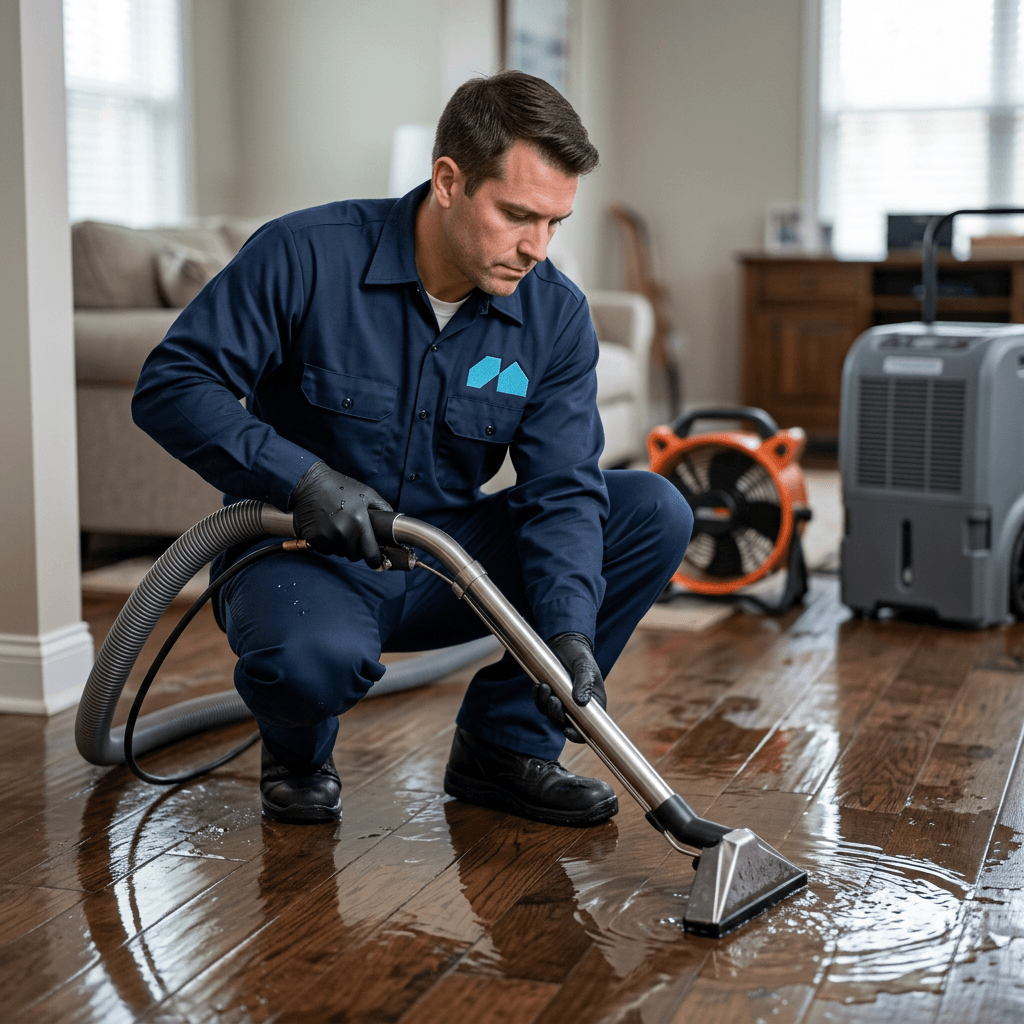
Pumping starts on arrival: submersible pumps for depth, extractors for the rest. As the level falls, crews shovel and pressure-wash the silt the water leaves behind. Depth and mud drive damage, so both go first.
Answer the Category Question
What the water is decides everything after it. On-site testing sorts rain runoff from groundwater from something dirtier. A contaminated result flips the job to our sewage cleanup protocol on the spot.
Contents Triage, Room by Room
Furniture, rugs, boxes, and keepsakes get sorted into save, clean, or document-and-discard. Category rules make those calls, not sentiment or convenience. Everything discarded is photographed and listed for your claim.
Set the Flood Cut Line
Drywall drinks upward, so cuts go well above the visible stain. Walls open to that line, saturated insulation comes out, and clean framing stays exposed. The waterline photos anchor the insurance file.
Treat, Then Dry, in That Order
EPA-approved antimicrobial application comes before the drying equipment spins up. Reversing that order pushes contamination through a warm, moving airstream. Once treated, rooms hand off to our structural drying team for the metered dry-down.
The Crawl Space Gets Its Own Plan
Charlotte's vented crawl spaces flood easily and dry terribly. Ours get dedicated pumping, mud-out, treatment, and drying as a separate zone. Closing the access hatch on a wet crawl space is how houses stay sick for years.
Flood Situations We Handle Across Charlotte
Not every flood starts in the sky. The source decides the contamination, the insurance lane, and the cleanup plan. These are the four we see most in Charlotte.
Basement and Crawl Space Flooding
Saturating rain pushes groundwater through walls, slabs, and vents into the lowest spaces. We pump, clear, treat, and dry those spaces as their own zones. Vented crawl spaces get special attention because they never dry on their own.
Creek and Overland Flooding
Homes near Charlotte's creek corridors can take rising water in a single storm cell. Overland flood water almost always carries soil, debris, and bacteria. Category testing and silt removal lead the plan.
Storm-Driven Interior Flooding
When wind opens a roof and rain pours in, the flood starts upstairs. We handle the interior water while the storm repairs are coordinated. One schedule covers both problems.
Appliance and Supply-Line Floods
A failed washer hose can put an inch of clean water through three rooms in an hour. Clean-water floods are the most saveable losses we see. Speed decides how much survives, so these calls run same-day too.
Where Charlotte Flood Water Comes From
Charlotte floods more from short violent rain than from rivers. The city's clay soils and creek network shape where the water goes. Five sources drive most of our flood calls.
Cloudburst Rain on Saturated Ground
Summer storm cells can drop inches of rain in an afternoon. Once Charlotte's clay soil saturates, everything after runs sideways into the nearest low spot. Sometimes that low spot is a living room.
Creeks That Jump Their Banks
Little Sugar, Briar, and McAlpine creeks rise quickly in hard rain and drop almost as fast. Properties along those corridors flood while the sun is back out. The city's Storm Water Services program publishes flood-safety guidance for exactly these areas.
Grading and Drainage That Point the Wrong Way
Lots that slope toward the house, clogged yard drains, and full gutters all deliver water to the foundation. Window wells and stairwells collect it. The first hard storm finds every weak point at once.
Groundwater Under Pressure
After long wet stretches, hydrostatic pressure pushes water through slab cracks and block walls. There is no hole to patch; the whole wall weeps. Basements below grade see it worst.
Failed Sump Pumps and Power Cuts
The storm that floods your crawl space is the same one that kills the power to your sump pump. No battery backup means no defense at the exact wrong moment. We meet a lot of first-time flood victims this way.
After the Water Drops: What Still Needs Attention
The water leaving is not the problem solved. Most flood damage in Charlotte homes happens after the visible water is gone. Look for these before calling it done.
A Waterline on the Drywall
The stain line shows where the water stood, but drywall wicks moisture a foot or more above it. Everything below and above that line needs evaluation. Paint hides it; meters do not.
Mud Left in the Crawl Space
Sediment holds both moisture and whatever bacteria the water carried. A crawl space with dried mud is not a clean crawl space. It keeps feeding humidity and odor into the house.
A Sweet, Earthy Smell
Bacterial and fungal growth starts within days of a flood. The smell shows up before anything visible does. If the house smells different a week after the water, something stayed wet.
Floors That Buckle Days Later
Subfloors absorb slowly and swell slowly. Hardwood and laminate that looked fine on day one can crown and buckle by day five. Early meter readings catch it while the floor is still saveable.
Soft Goods the Water Touched
Rugs, toys, upholstered furniture, and mattresses hold contamination that hard surfaces do not. What is safe to keep depends on the water category, not on how it looks. Testing answers it definitively.
Why Flooded Charlotte Homes Call Johnston
A flooded house is an emergency measured in hours. The company you call sets the pace for everything after. This is the case for calling us.
Pumps on the Truck, Not on Order
Submersible pumps, extractors, and drying gear ride with the crew. Same-day pump-out is the default, not a promise with an asterisk. Water depth starts dropping on the first visit.
We Test Before We Treat
Flood water gets a category test before cleanup begins, every time. Clean groundwater and contaminated overflow need entirely different protocols. Guessing wrong on that question is how families get sick.
Flood Claims Are Their Own Animal
Rising water usually runs through a separate flood policy, not your homeowners coverage. We build the documentation those claims demand: waterline evidence, category results, inventories. The file arrives adjuster-ready.
From Pump-Out to Rebuild, One Crew
Extraction, cleaning, drying, and full reconstruction run under one contract. Nobody gets handed off between a cleanup company and a builder. The same manager answers from first call to final walkthrough.
Two Decades on Charlotte Water Calls
We are locally owned, IICRC-certified, and have worked Charlotte-area water losses for more than twenty years. We know which streets pond first and which crawl spaces flood twice a summer. That knowledge shows up in the plan.
Mold Never Gets Its 48 Hours
Per EPA guidance, mold can establish within 24 to 48 hours of a flood. Our extraction, antimicrobial treatment, and drying are sequenced to beat that window. Preventing the second disaster is part of the first job.
Flood Response: Charlotte and the 40-Mile Ring
Flood calls cluster wherever water finds low ground, and we cover all of it. Crews serve Charlotte and roughly 40 miles in every direction.
The creek-corridor neighborhoods keep us busiest: Dilworth, Myers Park, Plaza Midwood, NoDa, and Cotswold. SouthPark, Ballantyne, University City, and Steele Creek round out the city list. South and east, we cover Matthews, Mint Hill, Pineville, Indian Trail, Stallings, Waxhaw, and Weddington. The I-77 north corridor runs Huntersville, Cornelius, Davidson, and Mooresville, with Concord, Kannapolis, and Harrisburg to the northeast.
Gastonia, Belmont, and Mount Holly carry the west side. Fort Mill, Rock Hill, Tega Cay, and Indian Land keep us busy across the South Carolina line. Flooded somewhere we did not name? Call anyway. We probably serve you.
Flood Cleanup Questions Charlotte Homeowners Ask
Flood emergencies generate the same urgent questions every time. Here are the honest answers before you call. Keep your family out of the water while you read.
Is floodwater dangerous?
Assume yes until it is tested. Rising water picks up bacteria, chemicals, and sometimes sewage on its way in. Keep children and pets clear and avoid contact until the category is known.
Can I clean up flood damage myself?
A small clean-water spill, maybe. Rising water, muddy water, or anything that sat more than a day needs professional handling. The contamination and the hidden saturation are both beyond household tools.
How do you prevent mold after flooding?
Speed, treatment, and verified drying. Per the EPA, mold can start within 24 to 48 hours, so extraction begins same-day. Antimicrobial application and metered dry-down close the window before growth starts.
Does homeowners insurance cover flood damage?
Usually not for rising water; that requires separate flood coverage. Water from above, like a burst pipe or roof leak, typically stays under your homeowners policy. We document the cause so each claim lands in the right lane.
What does flood cleanup cost in Charlotte?
Depth, square footage, water category, and finished versus unfinished space drive the number. A crawl space pump-out and a finished basement flood are different projects entirely. You get a written scope after pump-out, before restoration work begins.
How fast can you get here?
Crews reach most of the Charlotte metro within an hour, around the clock. Same-day pump-out is standard. The sooner the call, the shorter this whole list gets.
Do you remove the mud too?
Yes. Silt and sediment removal is part of every overland flood job, along with pressure washing and debris hauling. Treating over mud is not cleanup; it is burial.
What should I do before the crew arrives?
Stay out of standing water, especially anywhere near outlets or appliances. If the panel is safely reachable, cut power to affected rooms. Move what matters upward, and leave the rest for the crew.
Flooded Right Now? Start the Pump-Out
Standing water is doing damage while you read this. Call Johnston Environmental at (704) 860-4062 and a crew heads your way today, any hour. Professional flood cleanup in Charlotte, NC: pump-out, testing, treatment, and documented drying under one roof. The water rose fast. Help should too.
Call (704) 860-4062 Now