
How Fire Damage Restoration Works in Charlotte
Fire recovery is a race against chemistry. Residue keeps damaging finishes and suppression water keeps spreading long after the flames die. Our sequence is built around those clocks.
Hour One: Sealed and Safe
The first crew boards openings, tarps the roof, and confirms utilities are off. Weather, animals, and foot traffic all make a burned structure worse. Nothing else happens until the building is protected.
Day One: The Full Damage Map
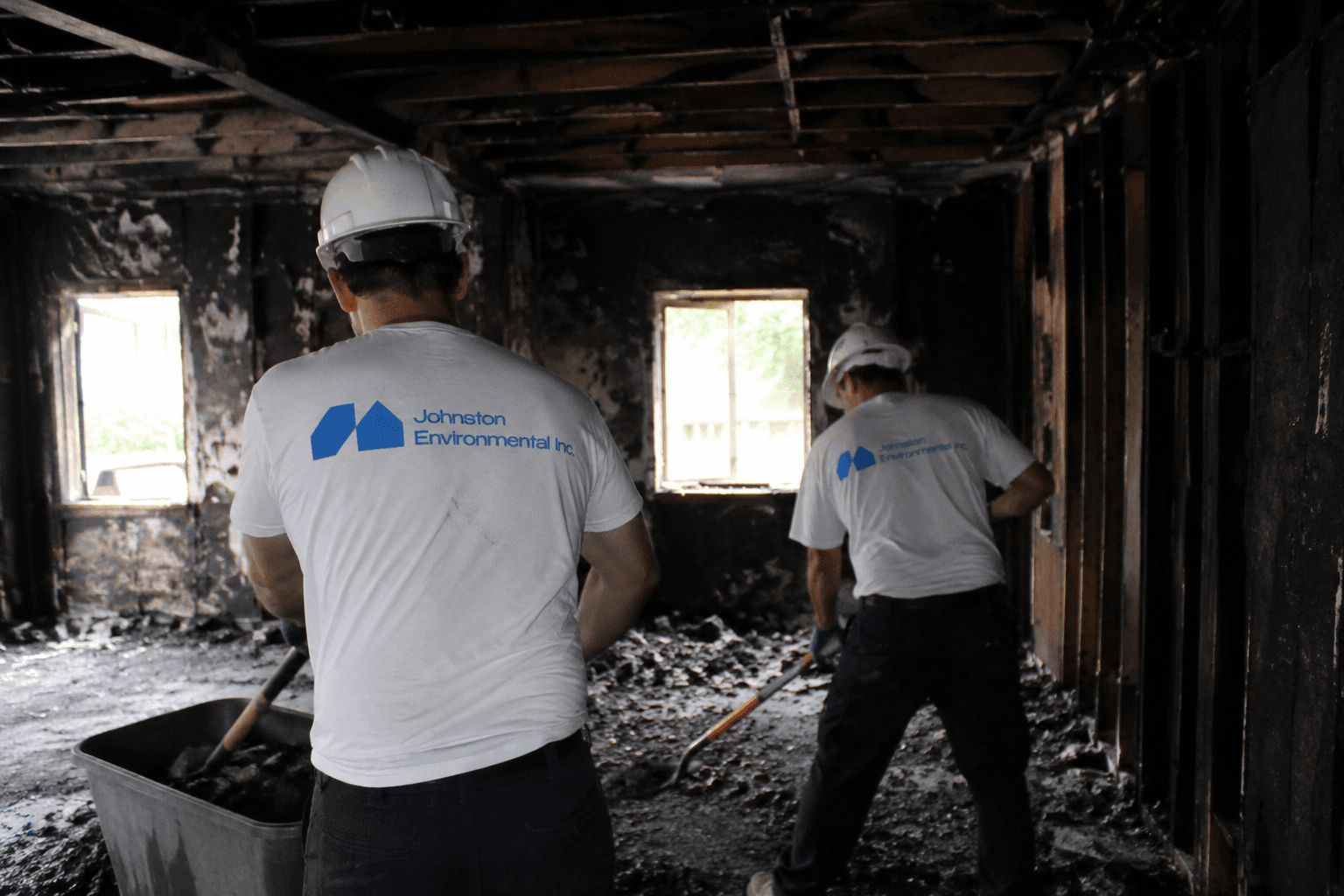
We walk every room, including the ones that look untouched, and record what we find. Photos, moisture readings, and notes become the map the entire project follows. Your adjuster works from the same map.
The Wet Work Cannot Wait
Suppression hoses leave gallons inside floors and walls, and wet structure spoils fast. Extraction and metered drying begin on day one through our water damage restoration crews. Fire losses that skip this step become mold losses.
Surface by Surface, Not Room by Room
Glass, stone, painted drywall, and bare wood each hold residue differently. Cleaning method follows the material, because one wrong chemical sets a stain for good. Fragile finishes get treated ahead of durable ones.
Belongings: Save, Send Out, or Sign Off
Each item lands in one of three buckets: cleaned on site, sent for specialty care, or documented as a loss. You approve the list before anything leaves the property. The inventory doubles as claim evidence.
From Odor Seal to Final Walkthrough
Once residue is gone, HEPA scrubbing and deodorizing clear the air, and treated surfaces get sealed before repaint. Reconstruction follows under the same contract, from framing to trim. The job ends with a walkthrough, not a disappearing act.
Fire and Smoke Services We Provide in Charlotte
A kitchen scare and a whole-home loss need very different scopes. We build each project from these four blocks, sized to what actually burned. Nothing gets sold that the loss does not need.
Board-Up and Weather-In
A burned envelope has to be closed against rain, wind, and liability the same day. Boarding, roof tarping, and temporary security happen on the first visit, any hour. The estimate can wait a day; the tarp cannot.
Smoke Cleanup Through the Whole Envelope
Smoke migrates through chases, ducts, and ceiling cavities into rooms the fire never reached. We chase residue through the whole envelope with material-matched cleaning and HEPA filtration. Odor treatment finishes the sequence, because smell is residue you have not found yet.
Contents: Inventory, Clean, Store
Everything you own becomes a line item after a fire, and that list carries your claim. We photograph, tag, and triage belongings, clean what can be saved, and store it safely. You sign off on every disposition.
Reconstruction to Move-In
Heat-checked framing, lost drywall, and burned finishes get rebuilt to current code under one contract. The manager who scoped your loss runs the rebuild schedule. The project ends when you move back in, not when the trucks leave.
What Starts House Fires in Charlotte
National fire data is blunt about where home fires begin. Charlotte follows the same pattern, with a local twist or two. Knowing the causes helps you close the gaps.
Cooking, by a Wide Margin
The U.S. Fire Administration found cooking caused 51 percent of residential building fires from 2017 to 2019. It stayed the leading cause in 2024. An unattended stovetop is still the single most likely way a Charlotte kitchen catches.
Heating Equipment in the Cold Months
Space heaters, fireplaces, and aging furnaces drive the winter spike in national fire reports. Older Charlotte homes with original chimneys and add-on heaters carry extra risk. Clearance around heat sources is cheap insurance.
Electrical Faults in Aging Homes
Streetcar-era and post-war houses often run wiring their builders never imagined loading this way. Overloaded circuits, old panels, and DIY additions start fires inside walls. The first sign is often the smell of hot plastic.
Dryers, Candles, and the Small Stuff
Lint-packed dryer ducts, candles near curtains, and overloaded power strips cause a steady share of losses. These fires start small and grow fast. Most are preventable with ten minutes of attention.
Lightning and Storm Fires
Carolina thunderstorms bring strikes that find rooflines, trees, and service lines. A lightning fire often pairs flame damage with storm and water damage at once. It is the fullest version of the three-problem fire scene.
What Fire Leaves Behind
The visible burn is only part of the loss. Most of what we restore after a Charlotte fire was never touched by flame. Check for these after any fire, even a small one.
Soot You Cannot See
Microscopic residue drifts into cavities, closets, and rooms far from the fire. It keeps etching finishes and metals for weeks after the event. If a room smells like smoke, residue is present, visible or not.
Smoke Odor That Comes Back
Odor that fades and returns on humid days is trapped residue re-releasing. Charlotte summers make it obvious. Treating the surfaces, not the air, is the only permanent fix.
Water Where the Hoses Reached
Firefighting water ends up inside walls and under floors, far from the burn room. Per EPA guidance, damp materials can grow mold within 24 to 48 hours. The wet side of a fire loss is on its own clock.
Heat-Stressed Framing
Members that never charred can still lose strength from heat exposure. Sagging, discoloration, and checking near the burn area need evaluation before rebuild. Guessing on structure is not an option.
An HVAC System That Spreads It
Running the system after a fire pulls soot through every duct and room. Keep it off until the ducts are inspected and cleaned. One switch flip can turn a one-room problem into a whole-house one.
Why Charlotte Trusts Johnston After a Fire
Fire recovery punishes slow starts and split responsibility. We built the service to remove both. Here is what that looks like in practice.
On Site Within the Hour, Any Hour
Fires do not schedule themselves, so the response line runs around the clock. Crews reach most of the Charlotte metro within 60 minutes. Board-up and stabilization start on that first visit.
The Water Side Is Our Home Turf
Every hose-fought fire is also a water loss, and water is what we do best. IICRC-certified technicians run extraction and documented drying alongside the fire work. Skipping that step is how fire jobs grow mold problems.
Soot Chemistry, Taken Seriously
Soot type and dwell time decide what can be saved. We match cleaning methods to each surface and start before residue sets permanently. Speed here saves finishes, fixtures, and money.
One Contract Through the Rebuild
Cleanup, repairs, and full reconstruction run as one continuous job. You never manage a handoff between companies mid-crisis. The person who walked the burn walks the finished rooms with you.
Insurance Handling Built In
Fire claims run on documentation, and ours is thorough: photos, inventories, readings, and scope sheets. We work directly with your carrier and bill them when coverage applies. You focus on your family, not the file.
Twenty Years, Locally Owned, In Writing
Johnston Environmental has restored Charlotte-area homes for more than two decades. The work carries a written make-it-right guarantee. We are here after the job, because we are from here.
Fire Response Across Greater Charlotte
Fire calls get the fastest dispatch we run, anywhere within about 40 miles of Charlotte. Every crew carries board-up materials, so securing the site never waits on a second truck.
City neighborhoods are all inside the hour: Myers Park, Dilworth, Plaza Midwood, NoDa, Cotswold, SouthPark, Ballantyne, University City, and Steele Creek. So are Matthews, Mint Hill, Pineville, Indian Trail, Stallings, Waxhaw, and Weddington to the south and east. Northern runs cover Huntersville, Cornelius, Davidson, Mooresville, Concord, Kannapolis, and Harrisburg.
Gastonia, Belmont, and Mount Holly hold the west. Fort Mill, Rock Hill, Tega Cay, and Indian Land carry the South Carolina side. If your town is not listed, call; the map is bigger than this paragraph.
Fire Recovery Questions, Answered Straight
After a fire, families need clear answers more than sympathy cards. These are the questions Charlotte homeowners ask us first. Call with the rest.
Is anything salvageable after a fire?
Usually far more than it looks like on day one. Hard goods, sealed containers, and much of the structure often clean up well. Soot dwell time matters most, which is why fast inventory and cleaning protect your belongings.
How long does it take to restore a house after a fire?
Cleanup and stabilization run days to a couple of weeks depending on spread. Rebuild timelines depend on scope, from weeks for a room to months for major structural work. You get a written schedule before reconstruction starts.
What is the difference between fire remediation and restoration?
Remediation stops the loss from getting worse: board-up, water extraction, soot stabilization. Restoration returns the property to pre-fire condition, through cleaning and rebuild. We run both under one contract.
Do you clean smoke-damaged electronics and appliances?
Smoke residue is corrosive inside electronics, so they need assessment before anyone powers them on. We document each unit and route salvage candidates to specialty cleaning. Flipping a switch to test is how TVs become total losses.
Does homeowners insurance cover fire damage?
Fire is a core covered peril on standard homeowners policies. The real questions are contents values, living expenses, and scope detail, which our documentation answers. We bill the carrier directly when coverage applies.
Who watches the house while we are in temporary housing?
The property stays boarded, tarped, and secured for the whole project. You get progress updates and scheduled walkthroughs, so nothing happens without you seeing it. The site is never left open overnight.
Is it worth restoring, or should we rebuild?
That is a scope-math question we answer with your adjuster, not a sales pitch. Structural evaluation, cleaning costs, and code requirements drive the comparison. Many Charlotte fire losses land on restore for most rooms and rebuild for the burn area.
What should I do right after the fire department leaves?
Call your insurer, then get the property boarded before weather gets in. Do not re-enter until officials clear it. Smoke reached more rooms than you think, so photograph everywhere once it is safe.
Get Fire Recovery Moving Tonight
Every day a fire-damaged home sits, soot sets deeper and water spreads further. Call Johnston Environmental at (704) 860-4062 for 24/7 board-up and a clear recovery plan. Complete fire damage restoration in Charlotte, NC: securing, cleaning, and rebuilding under one roof. The fire ended today. The recovery starts tonight.
Call (704) 860-4062 Now