Mold vs. Mildew: What's the Difference and Why It Matters
Charlotte summers keep indoor surfaces damp for months at a time, and two things tend to show up as a result. Homeowners often use the words interchangeably, but mold and mildew are not the same problem, and treating one like the other is how a wipe-down turns into a remediation job six months later.
The practical difference comes down to depth. One sits on the surface. The other grows into the material.
Key Takeaways
- Mildew is a surface growth that generally wipes away; mold penetrates the material it grows on.
- EPA guidance notes that mold can begin growing on damp materials within 24 to 48 hours.
- The EPA advises professional remediation for mold covering more than roughly 10 square feet.
What Mildew Actually Is
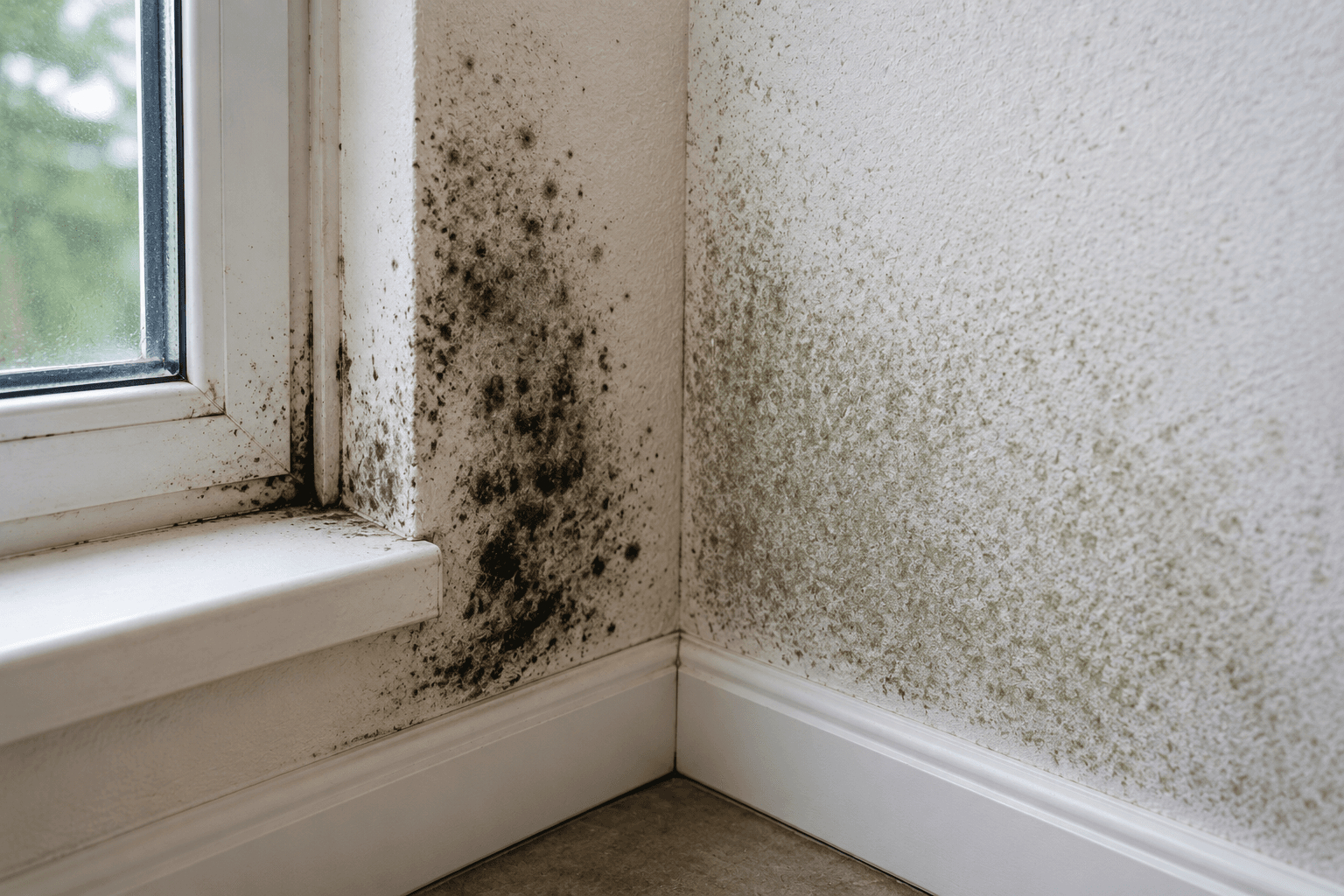
Mildew is a surface fungus. It grows flat, looks powdery or downy, and typically starts white or grey before turning yellowish or brown as it ages. You find it in the predictable damp places: shower walls and grout, windowsills where condensation collects, the underside of a bath mat, fabric stored in a humid closet.
Because it stays on the surface, mildew usually responds to cleaning. Scrub it off a non-porous surface, dry the area properly, and address whatever was keeping it wet, and it generally does not come back.
What Mold Actually Is
Mold is structurally different. It grows in raised, fuzzy, or slimy colonies and shows up in a wider range of colors, including green, black, blue, and grey. Crucially, mold sends filaments into porous material and digests it. On drywall, carpet backing, insulation, or wood, the visible surface growth is only part of what is present.
That is why wiping mold off drywall does not solve the problem. The visible colony is removed, the material underneath is still colonized, and the growth returns as soon as conditions allow.
How to Tell Them Apart at Home
Without lab testing you can still make a reasonable field assessment:
- Texture: mildew is flat and powdery; mold is raised, fuzzy, or slimy.
- Color: mildew runs white to yellow-brown; mold is more often green, black, or blue.
- Location: mildew favors hard, non-porous surfaces; mold favors porous materials that hold moisture.
- Response to cleaning: mildew wipes away and stays away once dried; mold reappears or leaves a stain that will not lift.
- Damage: mildew discolors a surface; mold degrades the material it is growing in.
If growth returns to the same spot after you have cleaned and dried it, treat it as mold and look for the moisture source.
Why Charlotte Homes Grow Both
The climate does most of the work. Charlotte sits in a humid subtropical zone, and the National Weather Service record for the region shows the long, warm, moisture-heavy summers that keep indoor relative humidity elevated for months.
The housing stock supplies the rest. Century-old homes in the streetcar suburbs sit over vented crawl spaces that pull humid outside air directly beneath the floor system. Tight modern envelopes in areas like Ballantyne hold moisture indoors when ventilation and dehumidification are not keeping pace. Add a sweating AC condensate line, an under-sink drip, or a slow roof leak, and both organisms have what they need.
Health Considerations and What the CDC Says
CDC guidance on mold notes that exposure can cause symptoms including nasal congestion, wheezing, and red or itchy eyes and skin. People with mold allergies, asthma, or compromised immune systems may experience more pronounced reactions.
The honest framing is that individual sensitivity varies considerably. What is consistent is that a persistent musty smell or visible growth indicates a moisture problem, and moisture problems do not improve on their own.
When Cleaning It Yourself Is Enough, and When It Is Not
Surface mildew on tile, glass, or a sealed countertop is a homeowner job. Clean it, dry it, and reduce the humidity that caused it.
The picture changes with scale and material. The EPA suggests professional remediation once mold covers more than about 10 square feet, and porous materials that have been colonized usually need removal rather than cleaning. Professional work under the IICRC S520 standard means containing the area so spores are not distributed through the rest of the house, running negative air pressure, removing affected material, and correcting the moisture source. Our mold remediation crews work to that standard.
Frequently Asked Questions
Is mildew dangerous?
Mildew is primarily a surface and cosmetic problem and is generally considered less serious than mold. It is still a signal that a surface is staying wet longer than it should.
Can mildew turn into mold?
They are different organisms, so mildew does not become mold. The same conditions that let mildew establish, however, will support mold if moisture continues, which is why recurring mildew is worth investigating.
Does bleach kill mold?
Bleach may address surface growth on hard, non-porous materials, but it does not reliably reach mold growing inside porous material, and the EPA does not recommend routine biocide use in remediation. Removing the moisture and the affected material is what actually resolves it.
What indoor humidity level prevents mold?
The EPA recommends keeping indoor relative humidity between 30 and 60 percent. In a Charlotte summer that usually requires active dehumidification, not just air conditioning.
Not Sure Which One You Are Looking At?
If growth keeps returning, covers a meaningful area, or sits on drywall, carpet, or framing rather than tile, the safe assumption is mold and an active moisture source.
Our mold remediation team in Charlotte can identify what you are dealing with, trace the moisture back to its source, and contain and remove the affected material properly.