How to Prevent Frozen Pipes and Avoid a Costly Emergency
Charlotte does not freeze often, and that is exactly the problem. A handful of hard freezes each winter is not enough to justify the plumbing protections standard in colder climates, so pipes here run through vented crawl spaces, unconditioned attics, and exterior walls with little insulation. When the temperature does drop and hold, those runs are the ones that split.
The damage is rarely small. A burst supply line releases water continuously until someone shuts off the main, which is why a freeze that lasts one night can flood a house for hours.
Key Takeaways
- The pipes that burst are the ones in unheated space: crawl spaces, attics, garages, and exterior walls.
- Letting a faucet drip and holding a steady thermostat day and night are the two highest-value steps, per Ready.gov winter weather guidance.
- Locate your main water shutoff before you need it, and make sure everyone in the house knows where it is.
Why Charlotte Pipes Freeze When Colder Cities' Do Not
Housing stock is built for the climate it expects. In the upper Midwest, supply lines are routed through conditioned space and insulated as a matter of course, because the design assumes sustained cold. Charlotte's building tradition assumes mild winters.
The result is that the same overnight low that is unremarkable in Minneapolis is a genuine risk here. Older homes in Dilworth, Plaza Midwood, and NoDa sit over vented crawl spaces where outside air circulates directly around supply lines. Newer builds may run plumbing through unconditioned attic space. Neither is a defect; both are exposure.
Know Which Pipes Are Actually at Risk
Not every pipe in your home is a candidate. The vulnerable ones share a trait: they sit in air that is not heated. Walk your house and identify:
- Supply lines running through a vented or unconditioned crawl space.
- Plumbing routed through an attic or above an unheated garage.
- Pipes on the interior face of an exterior wall, particularly kitchen and bathroom runs.
- Outdoor hose bibs, irrigation lines, and backflow preventers.
- Any line in a room you keep closed off and unheated through winter.
What to Do Before the First Freeze
Preparation done in November costs almost nothing. Disconnect and drain garden hoses, because a connected hose traps water at the bib and lets ice back into the wall. Shut off and drain irrigation lines and insulate the backflow preventer.
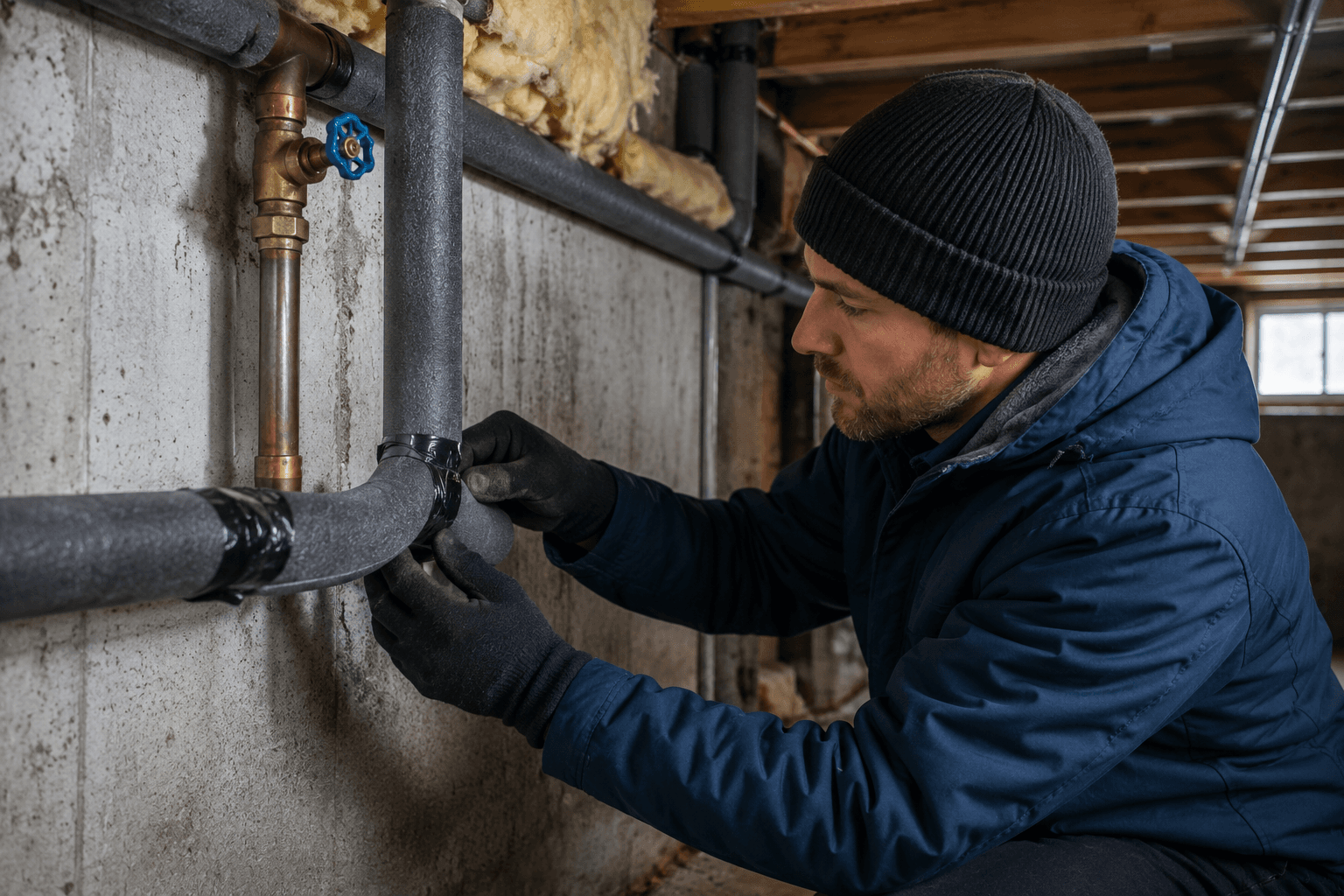
Fit foam pipe sleeves on exposed runs in the crawl space, attic, and garage, paying attention to elbows and joints where sleeves often gap. Seal the obvious air leaks: gaps where pipes penetrate the floor or exterior wall, crawl space vents that have lost their covers, and unsealed access doors. Confirm your main shutoff turns freely rather than discovering it is seized during an emergency.
What to Do When a Freeze Warning Is Issued
Ready.gov's winter weather guidance is specific, and the steps are cheap:
- Let cold water drip from the faucet served by the most exposed pipe. Moving water is far harder to freeze than still water.
- Keep the thermostat at the same temperature day and night. The overnight setback that saves money in October is the one that splits a pipe in January.
- Open kitchen and bathroom cabinet doors so heated room air reaches the plumbing behind them.
- Keep the garage door closed if any water lines run through the garage.
- If you are leaving town, set the thermostat no lower than 55 degrees Fahrenheit rather than shutting the heat off.
If a Pipe Freezes but Has Not Burst Yet
A faucet that produces only a trickle during a freeze usually means ice has formed somewhere upstream. Leave that faucet open, because the running water helps melt the blockage and the open tap relieves pressure as the ice releases.
Apply gentle heat to the frozen section with a hair dryer, a heating pad, or towels soaked in hot water, working from the faucet end back toward the blockage. Never use a blowtorch, propane heater, or any open flame; that is a fire risk and can damage the pipe. If you cannot reach or locate the frozen section, call a plumber before it splits.
If a Pipe Bursts
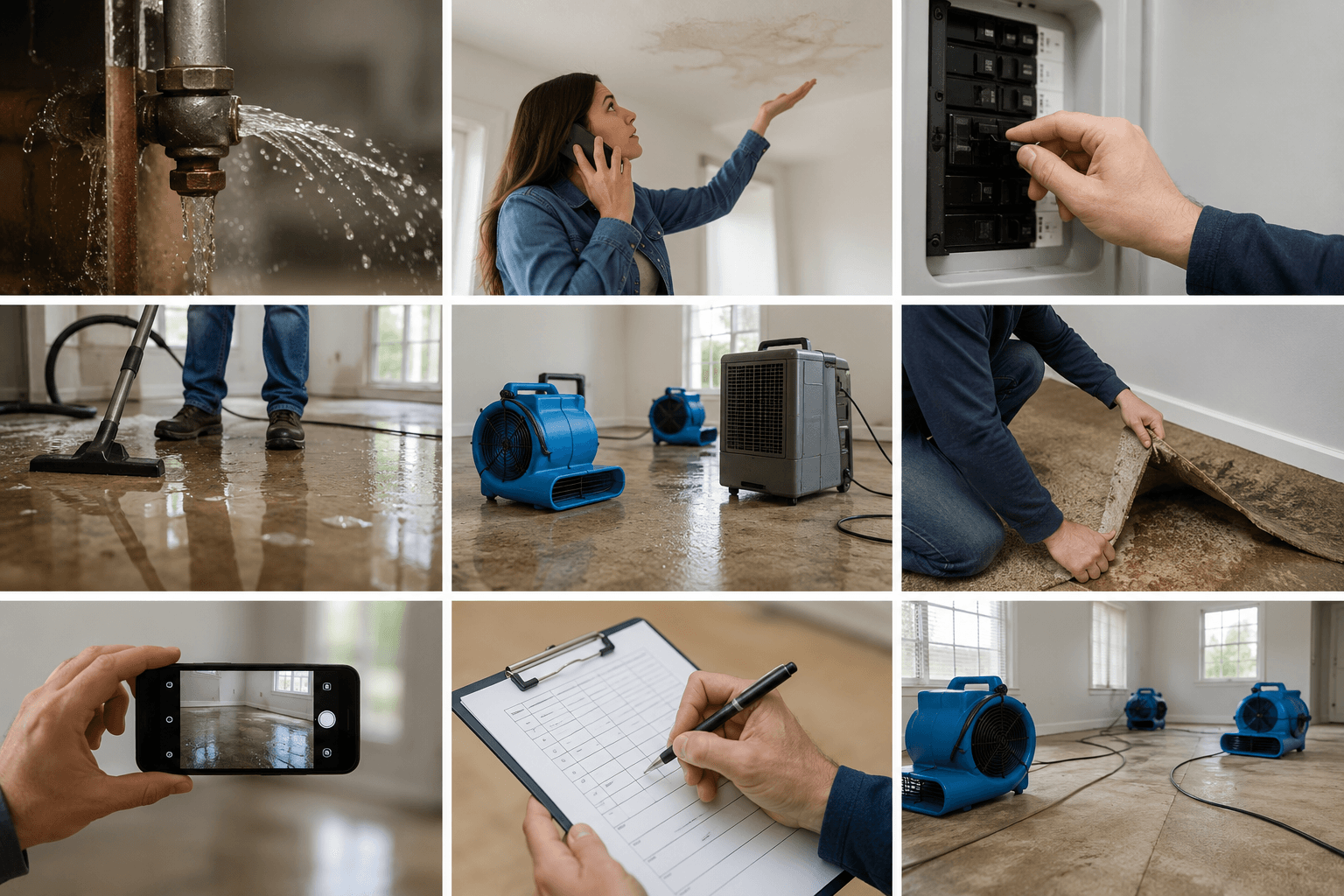
Shut off the main immediately, then cut power to the affected area if water is anywhere near outlets, panels, or appliances. Photograph and video everything before you move or remove anything, because that documentation is the backbone of your claim.
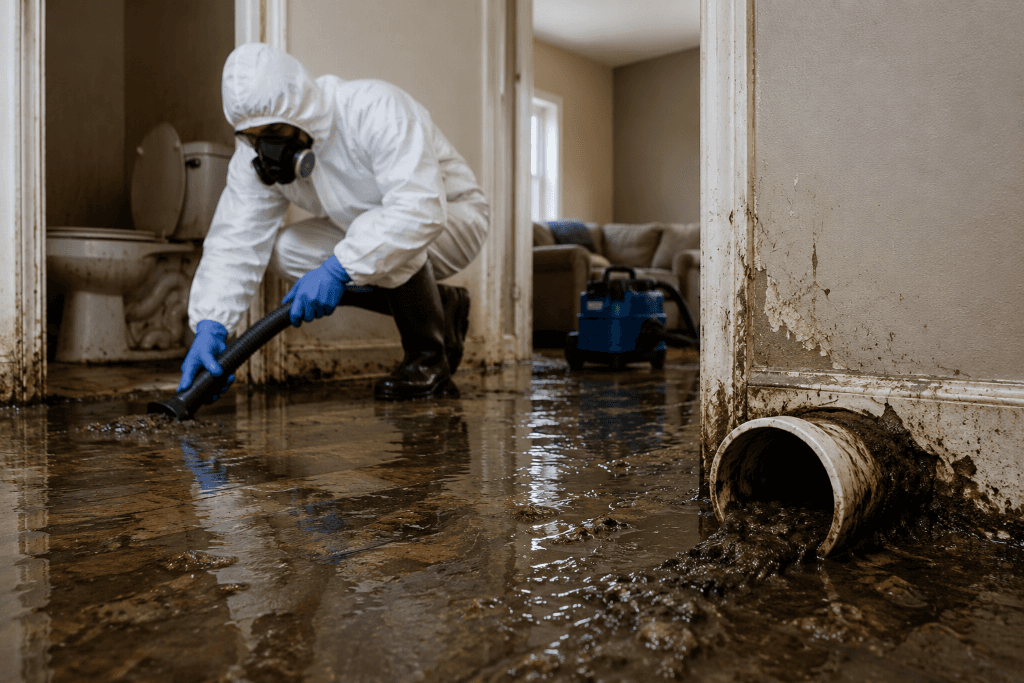
From there the priority shifts to drying. Water that soaks into subfloor, insulation, and wall cavities does not resolve on its own, and in Charlotte's humidity it feeds mold quickly. Our emergency response team is on call for exactly this, and our structural drying crews work to the IICRC S500 standard with documented daily moisture readings.
Frequently Asked Questions
At what temperature do pipes freeze?
Water freezes at 32 degrees Fahrenheit, but pipes in unheated spaces generally become vulnerable once outdoor temperatures fall into the low 20s and stay there, particularly with wind. Sustained cold matters more than a brief overnight dip.
Should I really leave a faucet dripping all night?
During a freeze warning, yes. The water wasted over one night costs a fraction of a single burst-pipe repair, and moving water is substantially more resistant to freezing.
Which faucet should I drip?
The one served by the most exposed run, usually the fixture farthest from where water enters the house or the one on an exterior wall. If you are unsure, drip more than one.
Does homeowners insurance cover frozen pipe damage?
A sudden burst is typically a covered peril, but carriers may deny claims where the home was left unheated. Keeping the heat on is both prevention and claim protection. See our insurance claims guide.
Burst Pipe in Charlotte? We Are On Call
Freeze damage does not wait for business hours, and the water keeps moving until someone stops it.
If a pipe has already split, our water damage restoration team responds around the clock across Charlotte with extraction, structural drying, and documentation your carrier can work from.